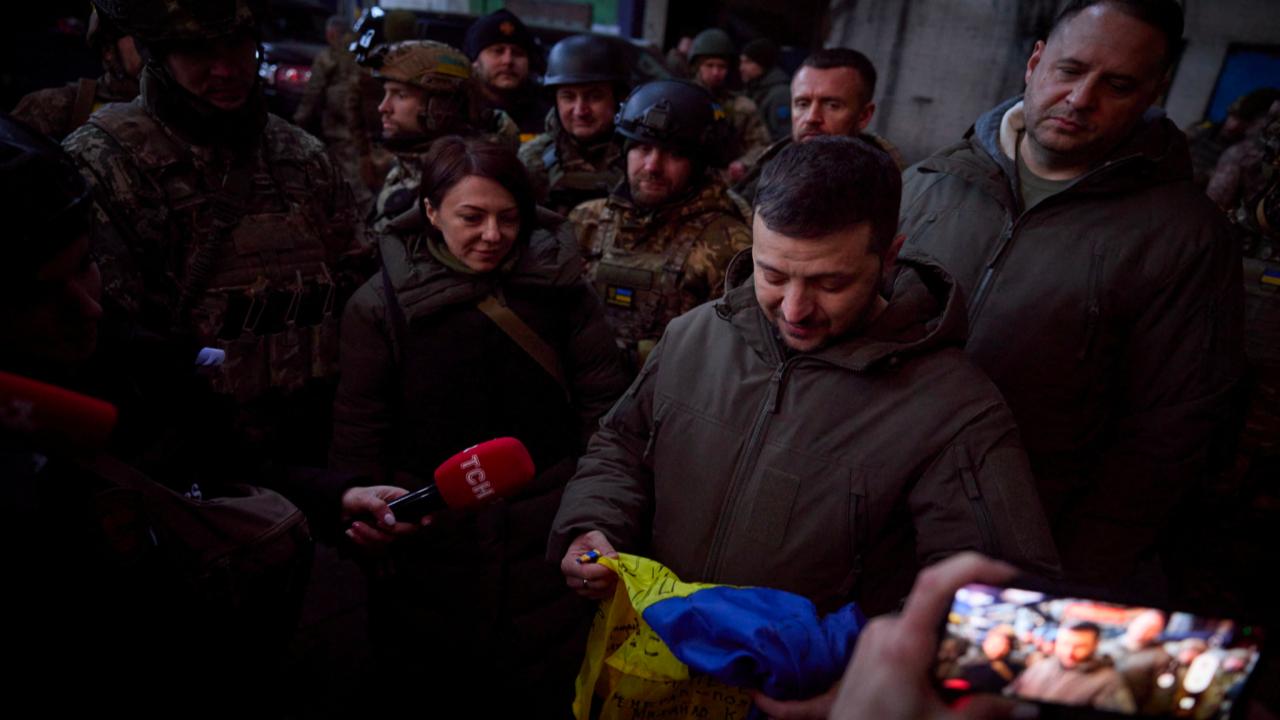
OnAir Post: Winter 2023 News
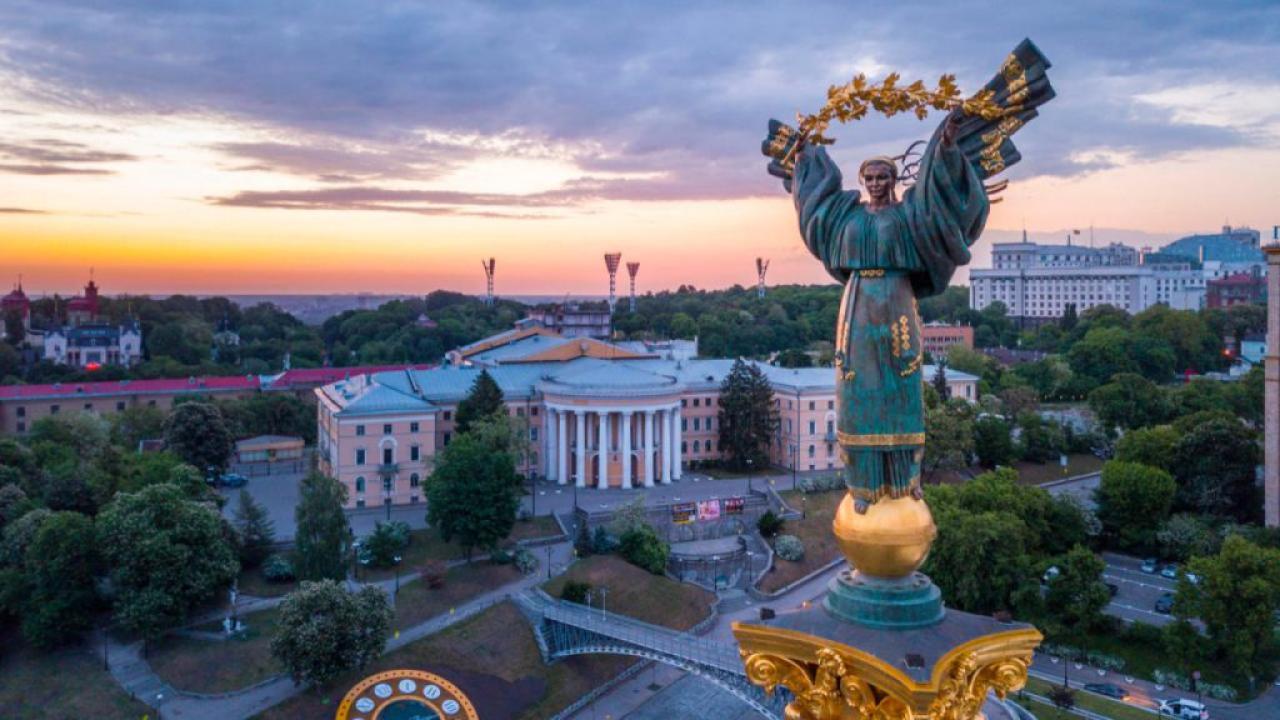
About Ukraine
Ukraine (Ukrainian: Україна, romanized: Ukraïna, pronounced [ʊkrɐˈjinɐ] ( listen)) is a country in Eastern Europe. It is the second-largest European country after Russia, which it borders to the east and northeast. Ukraine covers approximately 600,000 square kilometres (230,000 sq mi). Prior to the ongoing Russian invasion, it was the eighth-most populous country in Europe, with a population of around 41 million people. It is also bordered by Belarus to the north; by Poland, Slovakia, and Hungary to the west; and by Romania and Moldova to the southwest; with a coastline along the Black Sea and the Sea of Azov to the south and southeast. Kyiv is the nation’s capital and largest city. Ukraine’s state language is Ukrainian; Russian is also widely spoken, especially in the east and south.
Ukraine is a unitary state with a semi-presidential system. It is a developing country, ranking 77th on the Human Development Index. Ukraine is the poorest country in Europe by nominal GDP per capita, and corruption remains a significant issue. However, due to its extensive fertile land, pre-war Ukraine was one of the largest grain exporters in the world. It is a founding member of the United Nations, as well as a member of the Council of Europe, the World Trade Organization, and the OSCE. It is in the process of joining the European Union and has submitted an application for NATO membership.
Source: Wikipedia
OnAir Post: About Ukraine
Ukraine & Democracy
Summary
The politics of Ukraine take place in a framework of a semi-presidential republic and of a multi-party system. A Cabinet of Ministers exercises executive power (jointly with the president until 1996). Legislative power is vested in Ukraine’s parliament, the Verkhovna Rada (Ukrainian: Верховна Рада, lit. ’Supreme Council’).
As part of the Soviet Union as the Ukrainian Soviet Socialist Republic until 1991, the political system featured a single-party socialist-republic framework characterized by the superior role of the Communist Party of Ukraine (CPU), the sole-governing party then permitted by the Ukrainian SSR’s constitution. In 1996, the current constitution replaced the previous constitution that was introduced in 1978.
From 2014 changes in the administration on-the-ground in Crimea, Donetsk and Luhansk have complicated the de facto political situation associated with those areas.
Source: Wikipedia
OnAir Post: Ukraine & Democracy
News
Ukraine FM aims for February peace summitAssociated Press, Eduardo Castillo et al. – December 27, 2022
Ukraine’s foreign minister said Monday that his nation wants a summit to end the war but he doesn’t anticipate Russia taking part, a statement making it hard to foresee the devastating invasion ending soon.
Ukrainian Foreign Minister Dmytro Kuleba told The Associated Press that his government wants a “peace” summit within two months at the United Nations with Secretary-General António Guterres as mediator.
The U.N. gave a very cautious response.
“As the secretary-general has said many times in the past, he can only mediate if all parties want him to ...
Ukraine Government
Summary
The Cabinet of Ministers of Ukraine (Ukrainian: Кабінет Міністрів України, romanized: Kabinet Ministriv Ukrainy; shortened to CabMin), commonly referred to as the Government of Ukraine (Ukrainian: Уряд України, Uriad Ukrainy), is the highest body of state executive power in Ukraine. As Cabinet of Ministers of the Ukrainian SSR, it was formed on 18 April 1991, by the Law of Ukrainian SSR No.980-XII. Vitold Fokin was approved as the first Prime Minister of Ukraine.
The basic unit of government administration in Ukraine is a central office of executive authority (central executive office) which may be granted ministerial status. Each such central office of executive authority is chaired by its head (holova). Many central offices of executive authority without ministerial status may be part of a government ministry, while others function separately or support either the President of Ukraine or the Verkhovna Rada (parliament). Central offices of executive authority without ministerial status are designated either as services, agencies, or inspections. Selected central offices of executive authority are granted a “special status”. Only very few central executive offices are designated as funds, committees or otherwise
Source: Wikipedia
OnAir Post: Ukraine Government